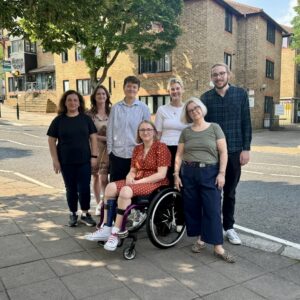
The Pathway Service at Ruils Independent Living shows how specialist advice can change the direction of someone’s life. For Disabled people and people with long-term health conditions in Richmond upon Thames, timely advice can mean avoiding homelessness, securing the right benefits, making a home safer or more accessible and reducing pressure on families and statutory services. This case study shares how Ruils’ two-person Pathway team supports people through complex housing, welfare benefit and social care systems, and why consistent funding is essential for advice services that prevent crises from escalating.
Georgia Wukovich, Caseworker at Ruils Independent Living
I’m one of two caseworkers on a service called the Pathway Service at Ruils, and we provide advice and advocacy on housing, welfare benefit and social care matters to clients with long-term health conditions or disabilities living in the Richmond Borough.
Our main ethos at Ruils is helping people to live independent lives. We subscribe to the Social Model of Disability and focus on breaking down barriers within society. Whether someone has a Disability or long-term health condition, we want people to be independent in their home and to have the information and support they need to help them to live a fulfilled life.
If someone wants to achieve something, we find a way. That’s what I really love about my role; not taking no for an answer and finding a work around. Often, it’s not that people aren’t able to do something, the problem is that systems don’t work for people. If you make systems more accessible, then people can do things for themselves.
In 2024/25, we worked with over 5,000 clients across services covering Richmond, Kingston, Wandsworth and Hounslow Boroughs. Pathways supported 89 disabled people in that time to challenge benefit and housing decisions, help them claim benefits, resolve their homelessness or disrepairs or make their home more accessible.
Also, in that time, our two-person team helped secure just under £15,200 in benefit back payments. Behind each figure is someone who gained more stability, more income, safer housing or a clearer route through systems that can otherwise feel impossible to navigate.
A Disability or long-term health condition can happen at any time in someone’s life. When it does, the person and their families may face a sudden and significant change in their circumstances which can quickly lead to crisis. Debts like rent arrears and utilities can accumulate so quickly when someone’s focus is just getting food on the table, especially with the cost-of-living crisis.
They may need to give up work or reduce their hours, family members may need to do the same to provide care, and the home may need adaptations. People may also be unaware of the benefits they can claim or unsure where to turn, and that’s where we come in.
Advice can keep people and their families in a more stable place, and it then releases pressure on other people, other services, so it does have a snowball effect: if someone can secure the right income, resolve a housing issue or understand the support available to them, they are less likely to reach crisis point elsewhere.
We always say, whenever people come to us, it’s never one person or one problem.
Our main challenge has been funding. Demand for advice services has increased, and cases are becoming more complex, partly because of cuts in other services such as mental health and social care. At the same time, funding has reduced and does not cover pressures such as the National Insurance increase or the Living Wage, so advice services have to make up the shortfall.
Our waitlist is often at capacity, and we have had to close it in the past.
Short-term funding can put pressure on services like ours when we are supporting clients who are on long waiting lists for housing, or for tribunals, and who need consistency. Advice services are so essential. Advice can make the difference between someone becoming homeless, or struggling financially, or not, and if we can’t provide a longer-term, consistent service, then it ends up putting pressure back on other services.
We have had a lot of support from AdviceUK with achieving our Advice Quality Standard Accreditation, which we are really proud of and which demonstrates the quality of our work. As a caseworker, I value the support and feedback that I get from the AQS audits.
Learning from other AdviceUK members and having access to the resources, training and support provided by AdviceUK has been invaluable. It’s been like having a safety net.