On 10 February, AdviceUK, the UK’s largest network of independent advice services, gave oral evidence at the second session of the House of Commons Justice Select Committee’s inquiry into access to justice, drawing on its written evidence and the experiences of AdviceUK’s over 700 members. In the session, Liz Bayram, Chief Executive of AdviceUK, highlighted the crucial role of advice services in ensuring everyone, regardless of means, can access justice, and the problems the sector is facing. She raised concerns that fewer people will be able to exercise their rights and access justice when they need to, and called for improved and sustainable funding for the sector and greater investment in the advice workforce.
The session focused on the issues facing the advice sector, including workforce pressures, funding and digitalisation, and provided an important opportunity for AdviceUK to advocate on behalf of its members who deliver free specialist advice to millions of people each year on a diverse range of social welfare issues. Liz Bayram appeared alongside Dr Philip Drake, Director, Manchester Justice Hub; Dr Lisa Wintersteiger, Chief Executive, AdviceNow; Mr Nimrod Ben-Cnaan, Head of Policy and Profile, Law Centres Network.
During the session, Liz Bayram drew attention to the importance of the advice sector in improving access to justice, explaining that most people come for advice because they experience a crisis such as debt, housing insecurity or a family crisis. It is often only when they speak with their advisor, that they understand their rights and whether they can take legal action.
Embedded in their communities, advice services are often the first and most trusted source of help for individuals facing these problems. Their clients often have multiple and complex problems that advisors can support holistically, and signpost or refer them to the right places. Each year, AdviceUK members advise 2.8 million people across Britain, including marginalised groups who would otherwise remain excluded from the justice system.
Liz Bayram told the committee that advice services are chronically underfunded and overstretched despite their crucial role. She cited AdviceUK data to show that the sector is facing a severe and growing capacity and workforce crisis – 88% of surveyed organisations said recruiting and retaining staff was a major challenge. In the year to September 2024, 90% of AdviceUK members saw rising demand, with over half unsure they could meet it. In some areas, this has led to “advice deserts” where free support is scarce or unavailable.
On funding, Liz Bayram welcomed the recent uprating of legal aid and the £20m three-year funding but warned this was a limited amount and would not help most advice services. Furthermore, the advice sector receives less government funding than it does from charitable trusts.
Liz Bayram said:
“Without action, advice services will continue to shrink. AdviceUK members need long-term sustainable funding to ensure they are able to meet the growing need and to support the Government’s Child Poverty Strategy, its 10 Year Health Plan for England and more. Alongside this, a National Advice Workforce Strategy is needed to ensure the sector can recruit and retain a workforce able to provide these vital services. These changes would help the Government ensure more people get early preventative support that would ease court backlogs, and help prevent more issues escalating to expensive court action and/or reliance on public services, so saving public money.”
During the session, Bayram also touched on digitisation. She explained that digital services and increasingly AI had a role to play in supporting the delivery of advice and increasing access to justice. But right now, this was primarily by reducing administration for advisors and supporting the initial triage of cases. All this freed up advisors’ time to see more clients or support complex cases, but advisors remained central to advice giving. This is because some people are digitally excluded; other clients are vulnerable or have more complex cases, and technology has not evolved to be able to build the trusted relationship needed to support these communities in the way an independent advisor can. It is important that smaller advice services are supported to make full use of the technology.
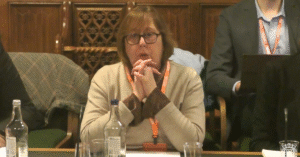
Liz Bayram, AdviceUK’s CE, providing oral evidence on access to justice in the Justice Committee inquiry on 10 February 2026
Notes to Editors
Case study
Nishkam Civic Association, an AdviceUK member based in Birmingham, reports that demand for advice far outstrips provision, with waiting times so long that many people give up seeking help until the crisis point. To cope, the advice centre has reduced its service remit to within one mile of the centre, being forced to turn vulnerable people away despite clear need. Cuts in funding, staff shortages, language barriers, digital exclusion, and increasingly complex cases have all reduced capacity, shifting services from prevention to crisis response.
Ceren Gunel, Press Officer: press@adviceuk.org.uk or 07955 296206